


The most common question we hear after a Felicegals ring ships: "Can I wear this every day?" It's the right question, asked at the wrong time. Gemstone durability — how a stone handles daily life — should be part of the selection process, not an afterthought. This guide covers the three core stones in the Felicegals collection: moss agate, lab sapphire, and moissanite. What each one can handle, where each one needs care, and how to match the stone to how you actually live.
At Felicegals, our stone selection spans moss agate, lab sapphire (lavender, green, pink), and moissanite — all set in handcrafted solid gold. This guide exists so you know exactly what you're wearing before you put it on.
Table of Contents
- Hardness vs. Toughness — The Distinction That Matters
- The Mohs Scale and What It Means for Daily Wear
- Moss Agate — Beautiful, Mindful, Worth It
- Lab Sapphire — The Everyday Warrior
- Moissanite — Near-Diamond Durability
- Stone vs. Lifestyle: Quick Reference
- FAQ
Hardness vs. Toughness — The Distinction That Matters
These two words are used interchangeably in everyday speech. In gemology, they describe entirely different properties — and confusing them leads to bad decisions.
Hardness is resistance to scratching, measured on the Mohs scale from 1 (talc) to 10 (diamond). A harder stone won't show surface wear from daily contact with other materials. Importantly, the Mohs scale is not linear — the gap between 9 and 10 is proportionally much larger than the gap between 7 and 8. A stone rated 9 can still be scratched by diamond dust, which is present in some abrasive household cleaners.
Toughness is resistance to chipping or fracturing under impact. A stone can be very hard but structurally brittle — diamond is the hardest mineral on earth but will chip if struck at a specific angle along a cleavage plane. Jade, by contrast, is only about 7 on the Mohs scale but is legendary for toughness — it resists breaking under impact far better than diamond does.
For an engagement ring worn daily, you need to consider both. High hardness means the surface stays clean and scratch-free. High toughness means the stone survives accidental knocks without chipping.
The Mohs Scale and What It Means for Daily Wear
The general rule for everyday ring wear: anything below 7 carries meaningful scratch risk, because quartz — present in dust, sand, and many abrasive materials — sits at 7 on the scale. A stone softer than quartz will accumulate surface scratches from ordinary environmental contact over time.
| Stone | Mohs Hardness | Daily Wear Rating | Key Consideration |
|---|---|---|---|
| Moss Agate | 6.5 – 7 | Moderate — mindful wear | Near the quartz threshold; protective setting essential |
| Lab Sapphire | 9 | Excellent — all-day, all-activity | One of the most durable colored gemstones available |
| Moissanite | 9.25 | Excellent — virtually unrestricted | Second hardest gemstone; handles any lifestyle |
| Diamond (reference) | 10 | Excellent | Hardest, but can chip under sharp impact |
Moss Agate — Beautiful, Mindful, Worth It
Moss agate sits at 6.5–7 on the Mohs scale — which places it right at the threshold where daily environmental contact begins to matter. Quartz particles are present in ordinary dust, in some cleaning products, and on many surfaces. A moss agate stone can be scratched by these over time if the ring is worn without any awareness.
That said: thousands of people wear moss agate engagement rings every day without damage. The stone itself has good toughness — it resists chipping well — and its internal patterns (the green dendritic inclusions that give it its garden-like appearance) are unaffected by surface wear. What changes is the polish on the stone's surface if it's scratched. With a protective setting and basic care habits, moss agate is a perfectly viable daily ring.
The setting matters enormously. A bezel setting — which wraps a metal rim around the stone's edge — offers the most protection, shielding the girdle from knocks and reducing the risk of edge chipping. Our filigree and deep-prong settings also provide meaningful edge protection without obscuring the stone's appearance.
What moss agate handles well: office work, desk-based life, dining, social events, light cooking, travel, most everyday activities.
What to remove it for: gym, gardening, rock climbing, heavy manual work, swimming in chlorinated water.


Lab Sapphire — The Everyday Warrior
Lab-grown sapphire is corundum — the same mineral as natural sapphire — with a Mohs hardness of 9. This makes it one of the hardest gemstones used in jewelry, second only to diamond and moissanite. In practical terms: a lab sapphire ring can handle virtually any daily activity without surface wear. Dust, metal surfaces, fabric, kitchen counters — none of them can scratch a sapphire surface.
Beyond hardness, lab sapphire has excellent toughness. It doesn't have cleavage planes like diamond does, which means it resists chipping under impact far better. You'd have to work fairly hard to damage a sapphire stone in normal ring wear scenarios.
Lab-grown sapphires are physically and chemically identical to natural sapphires — they're just grown in a controlled environment rather than mined. At Felicegals, we carry lab sapphire in lavender, green, and pink, each one vivid and consistent in saturation. If you want a colored stone you genuinely never have to think about, sapphire is the answer.


Moissanite — Near-Diamond Durability
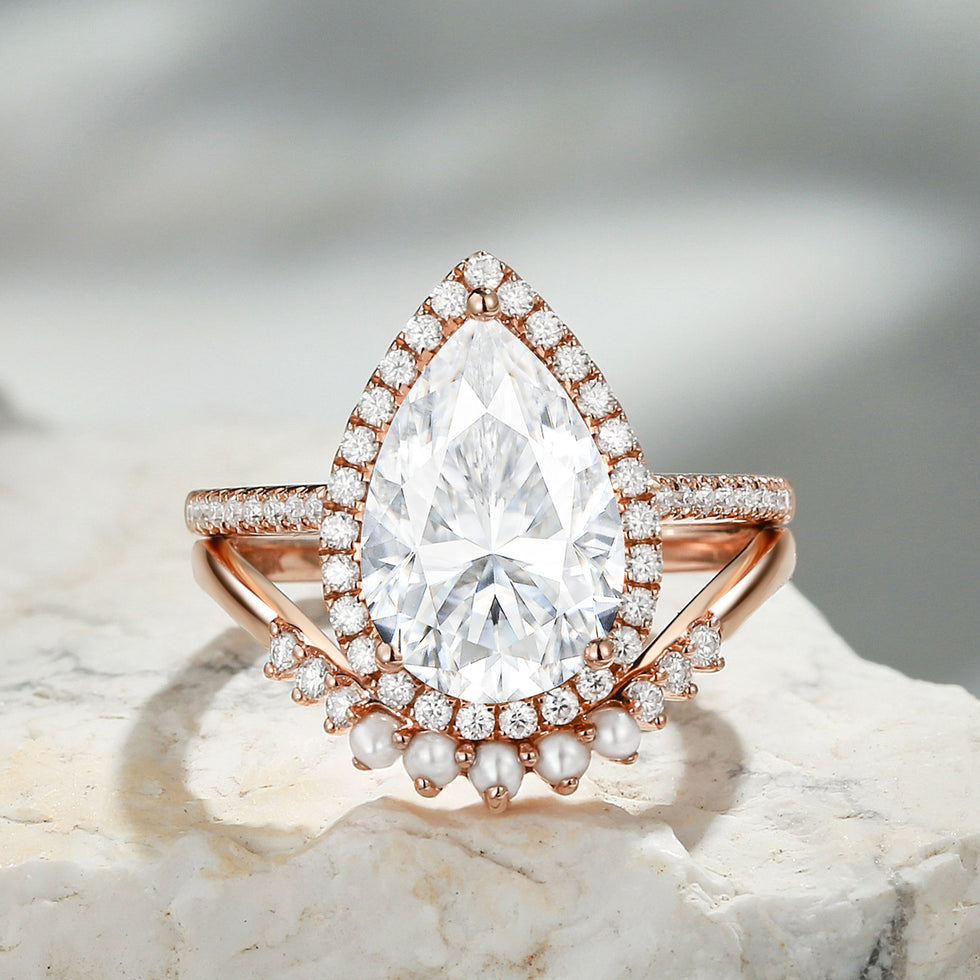
At 9.25 on the Mohs scale, moissanite sits between sapphire and diamond — and in practical daily wear terms, that 0.25-point difference over sapphire is largely academic. Only diamond and other moissanite stones can scratch moissanite. Everything you encounter in ordinary life — surfaces, tools, fabric, metal, your other jewelry — will leave it unmarked.
Moissanite also has excellent toughness. Unlike diamond, it lacks perfect cleavage, which means impacts that might chip a diamond are less likely to damage moissanite. The combination of extreme hardness and good toughness makes moissanite the most durability-optimized option in our collection for active, hands-on lifestyles.
One additional note: moissanite is thermally stable and chemically inert. Heat, cleaning chemicals, chlorine, sunlight — none of these affect its optical properties. The sparkle you see on day one will still be there decades later.


Stone vs. Lifestyle: Quick Reference
| Activity | Moss Agate | Lab Sapphire | Moissanite |
|---|---|---|---|
| Office / Desk work | ✓ Fine | ✓ Fine | ✓ Fine |
| Cooking | ◐ Careful (hard surfaces) | ✓ Fine | ✓ Fine |
| Gym / Weights | ✗ Remove | ✓ Fine | ✓ Fine |
| Gardening / Outdoor work | ✗ Remove | ◐ Careful | ✓ Fine |
| Swimming (chlorinated) | ✗ Remove | ◐ Occasional OK, not habitual | ✓ Fine |
| Cleaning / Chemicals | ✗ Remove | ◐ Avoid harsh chemicals | ✓ Fine |
| Travel | ✓ Fine | ✓ Fine | ✓ Fine |
Related Reads
- Moissanite vs Lab Diamond vs Natural Diamond — The Complete Guide
- How Moss Agate Keeps the Seasons on Your Hand?
- Lavender Sapphire Engagement Rings: The Dreamy, Nature-Kissed Stone for the Non-Traditional Bride
FAQ
Is moss agate too soft for an engagement ring?
Not necessarily — it's a tradeoff. At 6.5–7 Mohs, moss agate sits at the lower edge of acceptable daily-wear hardness. Surface scratches can accumulate over time with careless wear. But with a protective setting (bezel or deep prong) and the habit of removing it for high-impact activities, many people wear moss agate engagement rings for years without visible damage. It's the right choice for someone who loves what the stone looks like and is willing to engage mindfully with wearing it.
Will a lab sapphire ring scratch if I wear it every day?
In normal life, no. Lab sapphire is rated 9 on the Mohs scale — it can only be scratched by moissanite, diamond, or other sapphires. Everyday dust, metal surfaces, fabric, and kitchen materials all fall well below sapphire's hardness. It's one of the most durable colored gemstones available for jewelry use.
Can I shower and swim with my ring on?
For moissanite and lab sapphire: occasional swimming and regular showering are generally fine. Chlorinated pool water won't damage the stones, but prolonged chlorine exposure can affect gold alloys — particularly in lower-karat or plated settings — so it's worth removing the ring before habitual swimming. For moss agate: remove before swimming. Extended water exposure and chlorine can affect the stone surface over time.
What's the most durable Felicegals ring for an active lifestyle?
Moissanite in a bezel or low-profile setting. The stone itself is virtually scratch-proof at 9.25 Mohs, and a bezel setting protects the stone's edge and eliminates exposed prongs that can catch or bend. If you prefer a colored stone, lab sapphire in a bezel setting is an excellent second choice — it handles essentially the same range of activities with only minor caveats around chlorine exposure.
How should I clean my Felicegals ring at home?
Warm water, a drop of dish soap, and a soft toothbrush — about two to three minutes of gentle scrubbing, rinse thoroughly, pat dry. This removes the lotion, soap residue, and skin oil buildup that dull any stone over time. For sapphire and moissanite, ultrasonic cleaners are also safe. Avoid ultrasonic cleaners for moss agate rings. Do not use bleach or toothpaste on any of these stones.
Does the setting style affect how durable the ring is overall?
Yes, significantly. A bezel setting — a metal rim that wraps around the stone's perimeter — offers the most protection for both the stone and the setting structure. Prong settings expose more of the stone's surface (more visible sparkle) but the prongs themselves can catch on fabric or bend over time. For active lifestyles, a low bezel or flush setting is our recommendation regardless of which stone you choose. All Felicegals settings are built for long-term wearability — we'd rather you wear the ring than leave it in a drawer.
Felicegals crafts engagement rings for the non-traditional bride — handmade in solid gold with nature-inspired designs. Explore the full collection at felicegals.com.
