


Of all twelve birthstones, ruby carries the longest human history. Ancient Sanskrit texts called it ratnaraj — king of precious stones. Burmese warriors embedded rubies in their skin before battle, believing the stone made them invulnerable. Medieval Europeans considered it a protection against plague and a cure for bleeding. The red of a fine ruby was believed to hold fire that could not be extinguished — a light that lived inside the stone.
July's birthstone is also, practically speaking, one of the best gemstones for engagement ring wear. At 9 on the Mohs scale, ruby is exceeded in hardness only by moissanite and diamond. It's vivid, durable, and loaded with meaning. And at Felicegals, we carry lab-grown ruby, garnet, and lab pink sapphire — all the red stones worth knowing about, for every kind of non-traditional bride.
Table of Contents
- Ruby: History, Meaning & Symbolism
- Understanding Ruby Color — What Actually Makes a Ruby Valuable
- Lab-Grown Ruby vs. Natural Ruby
- Felicegals Ruby Rings
- Three Red Gemstone Alternatives to Ruby
- How to Choose Your Red Stone
- FAQ
Ruby: History, Meaning and Symbolism
Ruby is a variety of corundum — the same mineral family as sapphire — colored red by chromium. The chromium that gives ruby its color also causes it to fluoresce under ultraviolet light, creating the glowing warmth that separates a fine ruby from any other red stone. No other red gemstone has this combination of saturation, hardness, and inner luminosity.
Symbolically, ruby has represented passion, protection, courage, and life force across virtually every major culture that has encountered it. It's the traditional gift for 40th anniversaries, and it remains one of the few colored gemstones where price per carat can exceed diamonds of comparable quality — a function of genuine rarity at the top end of the quality spectrum.
For July birthdays, ruby is the official birthstone designated by the American Gem Society. For non-traditional brides, it's also one of the most distinctive engagement ring choices available: vivid, historically significant, and completely unlike the white stones that dominate the category.
Understanding Ruby Color — What Actually Makes a Ruby Valuable
Ruby color is evaluated on three dimensions: hue (the direction of the red), saturation (intensity), and tone (lightness to darkness). The ideal combination — a slightly bluish pure red at high saturation and medium-dark tone — is what gemologists call "pigeon's blood" ruby, historically associated with stones from the Mogok Valley in Myanmar.
In practice, most rubies available for jewelry use are heat-treated to improve their color and clarity, and many come from sources including Mozambique, Sri Lanka, and Thailand in addition to Myanmar. Color quality varies enormously across the market. For lab-grown rubies, the color is controlled during production — you get consistent, vivid red without the variability of natural ruby at the same price point.
What to look for: a red that feels alive, not muddy or pink. Too much pink and you're in pink sapphire territory (which has its own appeal — see below). Too much purple or brown and the stone loses the fire that makes ruby distinctive. The best rubies look like something is lit from inside.
Lab-Grown Ruby vs. Natural Ruby
| Property | Natural Ruby | Lab-Grown Ruby |
|---|---|---|
| Chemical composition | Al₂O₃ + Cr (chromium-doped corundum) | Identical — Al₂O₃ + Cr |
| Hardness | 9 Mohs | 9 Mohs (identical) |
| UV fluorescence | Yes — glowing red warmth | Yes — identical fluorescence |
| Inclusions | Common; most are heat-treated | Minimal — very clean appearance |
| Price per carat | $500 – $100,000+ | $20 – $200 |
| Ethical sourcing | Varies by origin; tracing difficult | Conflict-free; fully traceable |
| Color consistency | Variable — each stone unique | Consistent; vivid red reliably achieved |
All Felicegals ruby pieces use lab-grown ruby. The stone is physically and chemically identical to natural ruby — it fluoresces the same way, handles the same way, and looks the same way under all lighting conditions. The price difference means the budget goes into the metalwork and design rather than mining premiums.
Felicegals Ruby Rings
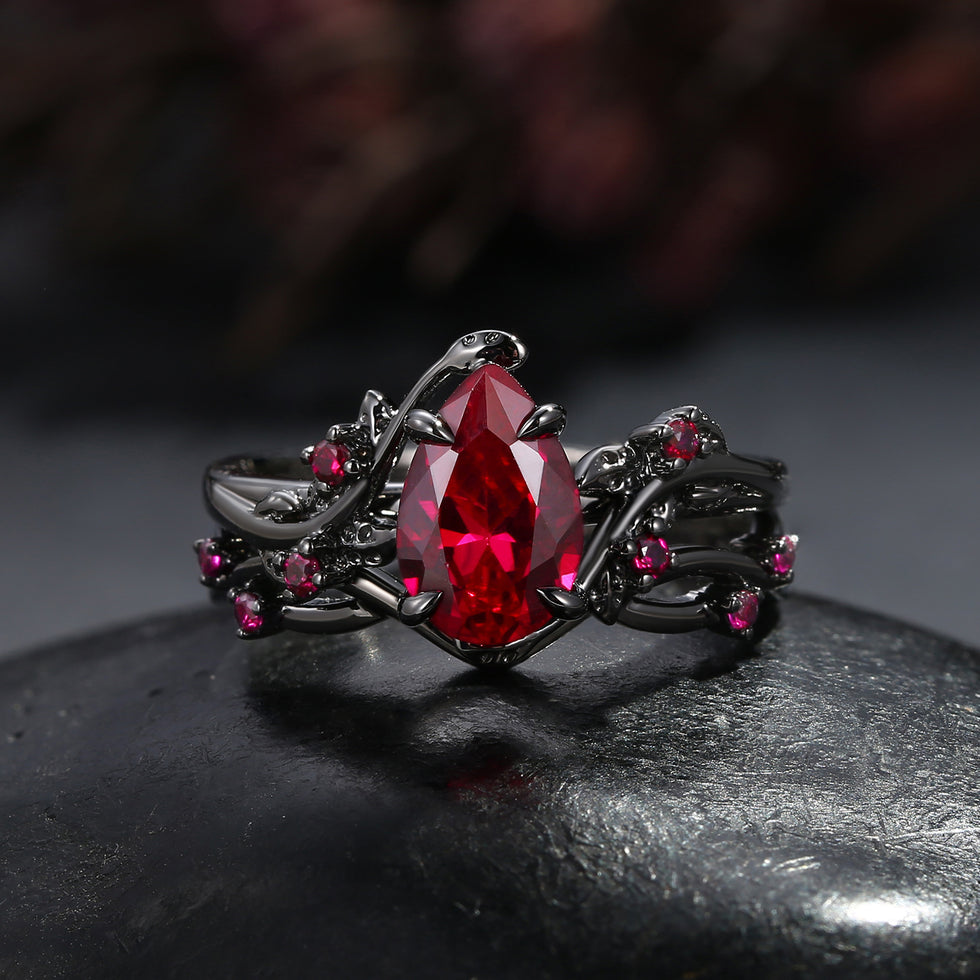
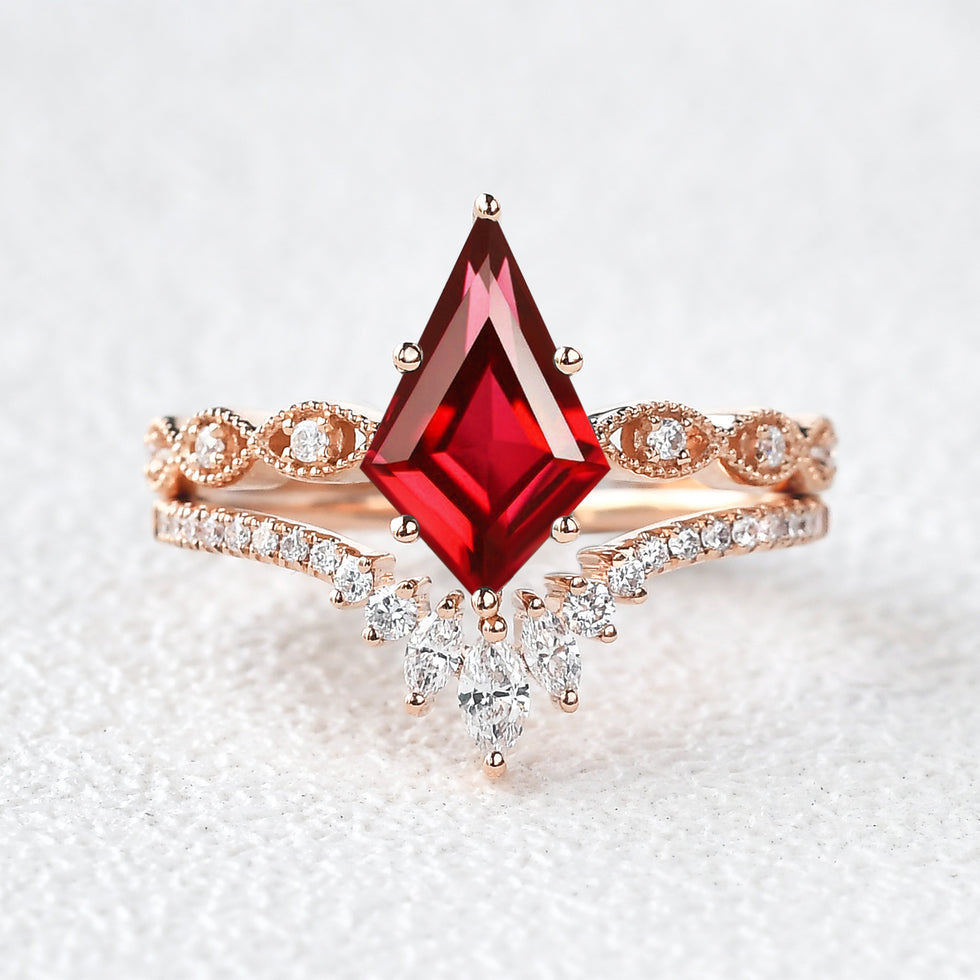
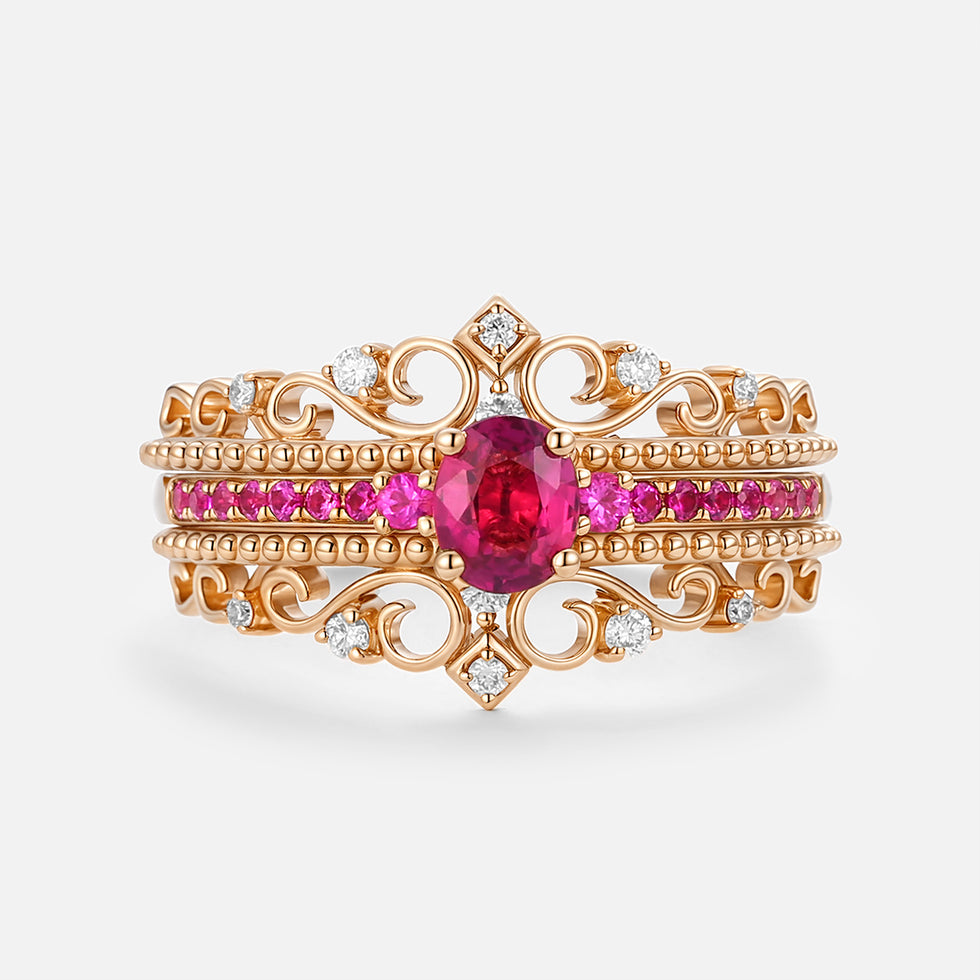
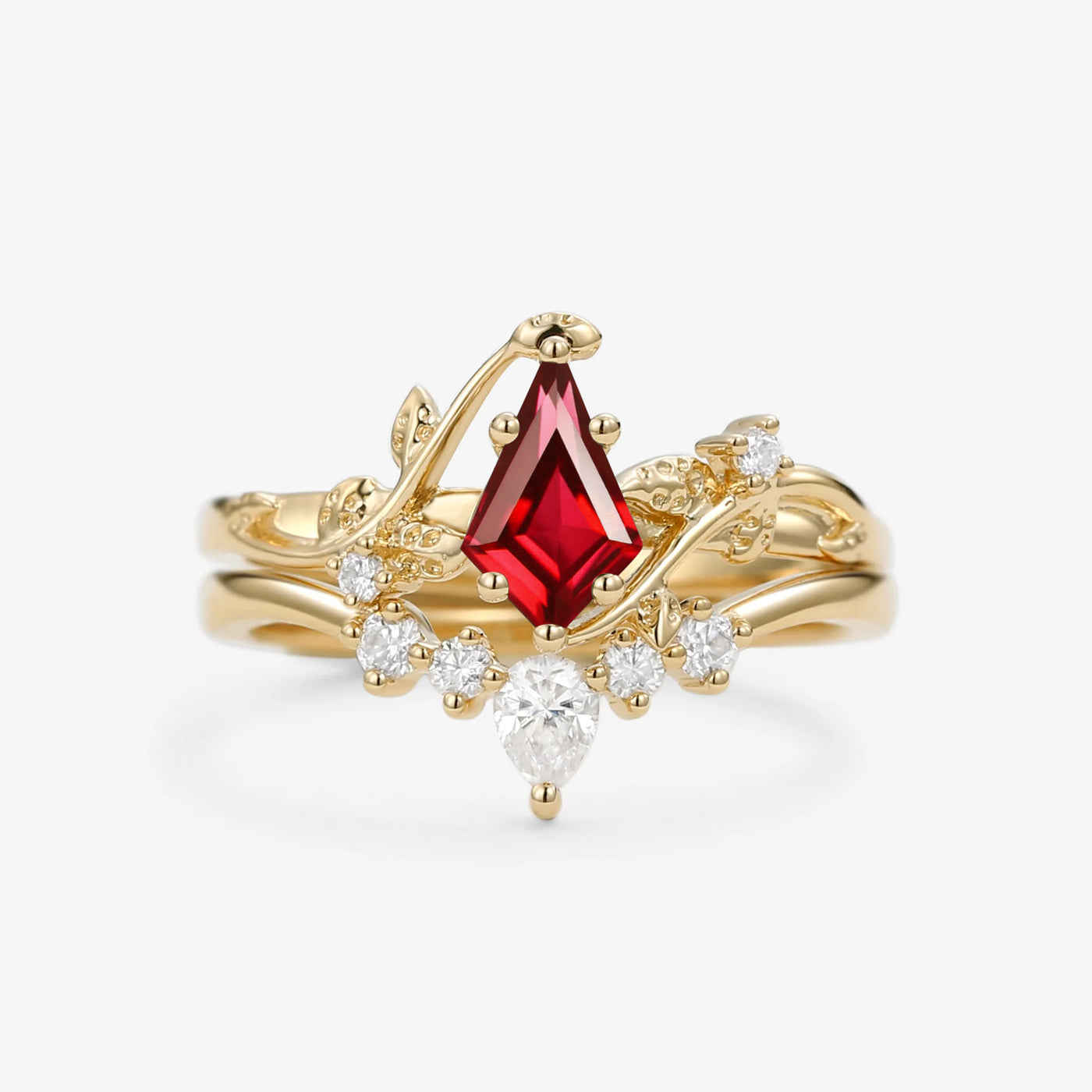
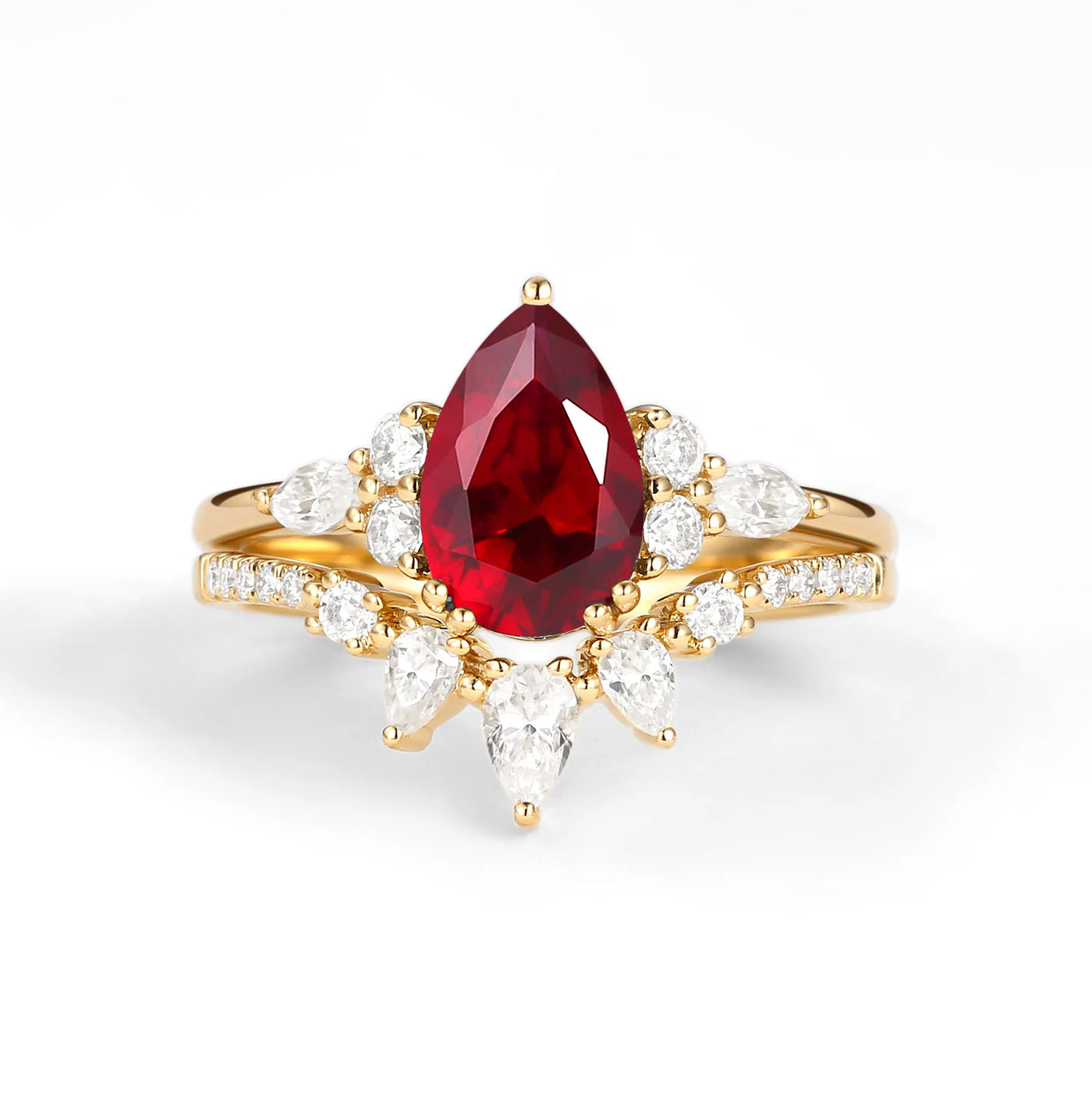
Our lab ruby collection pairs the stone with handcrafted solid gold botanical settings — leaf motifs, floral engravings, and nature-inspired structures that give the vivid red a visual context that amplifies rather than competes with it. These are not conventional ruby rings. They are engagement rings for the woman who wants her July birthstone to look like nothing else on the market.
Three Red Gemstone Alternatives to Ruby
Ruby is extraordinary — but it's not the only red stone worth wearing. For brides who want the red family without the ruby specifically, or who love ruby but want an additional stone with a different color temperature, these three alternatives cover the full range of what red can be.
Garnet — The Earthy Red
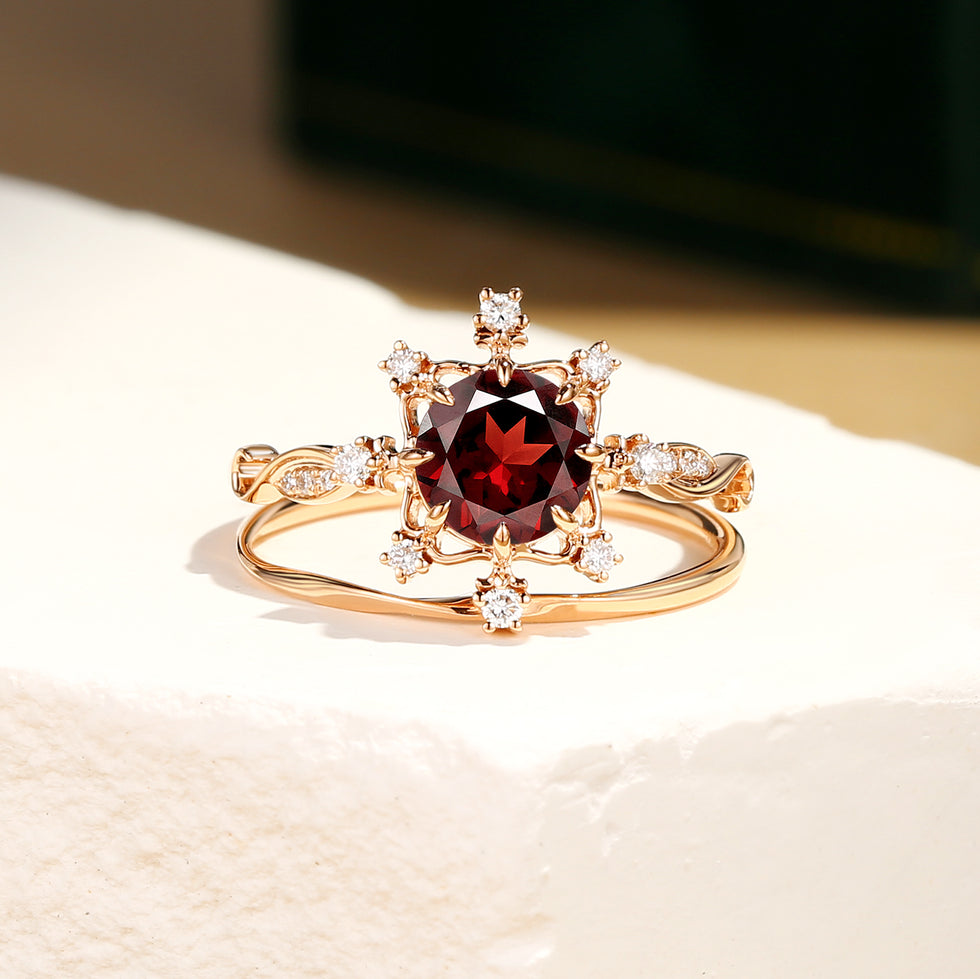
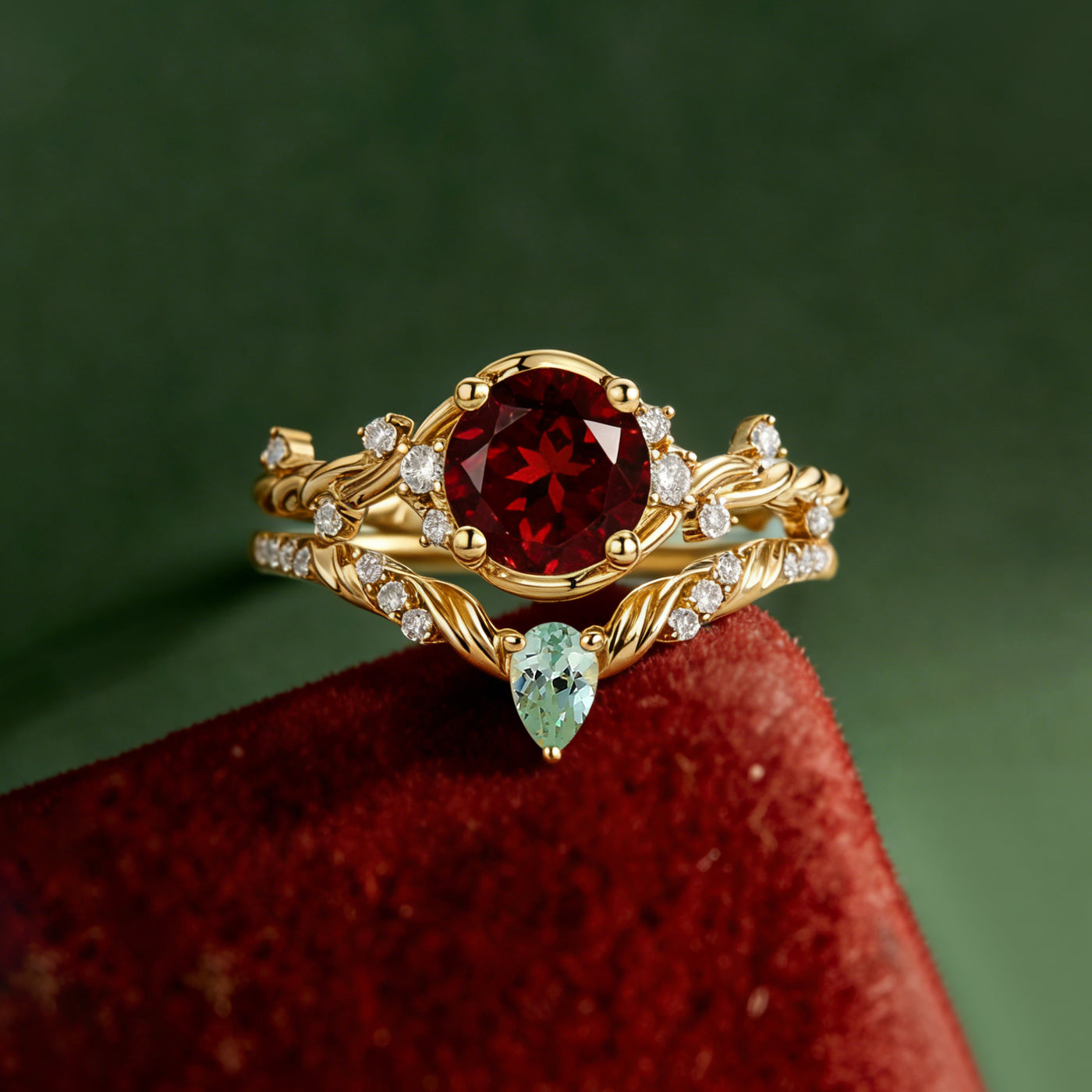
Garnet's red skews warmer and deeper than ruby — toward burgundy, claret, and wine rather than vivid crimson. Where ruby has electric clarity, garnet has warmth. It's been used in jewelry for at least 5,000 years and remains one of the most historically significant colored gemstones in the world.
At 7–7.5 Mohs, garnet is softer than ruby or sapphire — suitable for daily wear with reasonable care, but requiring more mindfulness than a harder stone. In a Felicegals nature-inspired setting, garnet looks extraordinary: the deep red against gold metalwork references autumn, the forest floor, and the organic world in a way that vivid ruby doesn't quite reach.


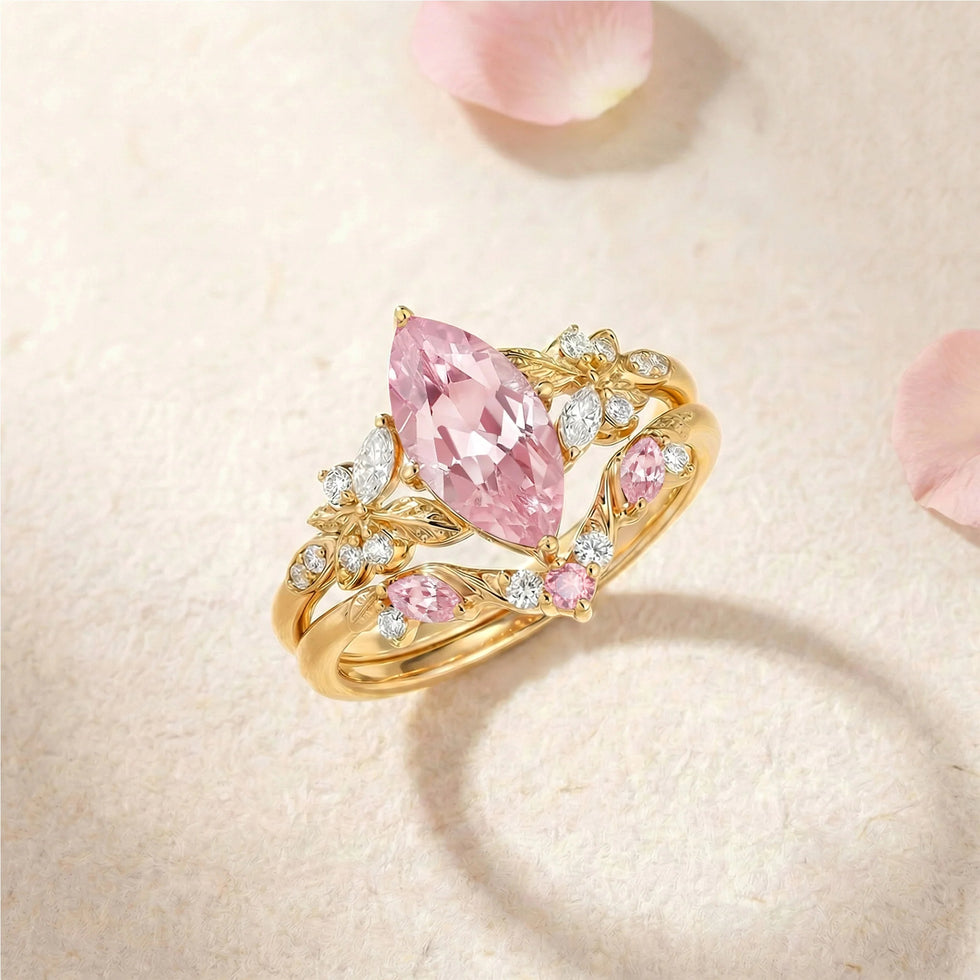
Lab Pink Sapphire — Ruby's Romantic Sister
Pink sapphire and ruby are the same mineral — corundum — differentiated only by chromium content. More chromium produces the deep red of ruby; less chromium produces the pink of pink sapphire. The boundary between the two is genuinely contested among gemologists — "deep pink sapphire" and "light ruby" often describe the same stone depending on who you ask.
What this means practically: lab pink sapphire has the same 9 Mohs hardness as ruby, the same toughness, the same durability profile — at a lower price point and with a softer, more romantic color. For the bride who loves the July birthstone energy but wants something that reads dreamy rather than fiery, pink sapphire is the answer. It sits between ruby's red and the full blush of pink in a register that photographs beautifully and wears even better.


How to Choose Your Red Stone
Choose lab ruby if: you want vivid, electric red — the color that has represented passion and power for centuries. Ruby is the July birthstone in its purest form. It's also the right choice for a 40th anniversary, for someone with strong personal or family connection to the stone, or for anyone who just wants their ring to announce itself in red from across a room.
Choose garnet if: you want a warmer, earthier red — burgundy over crimson, depth over brightness. Garnet suits the bride drawn to vintage aesthetics, organic materials, and a color palette that references autumn and the forest. It's more affordable than ruby at comparable sizes, which means more elaborate metalwork is accessible at a lower overall price.
Choose pink sapphire if: you love the red family but want a softer color temperature — more blush than fire, romantic rather than dramatic. Pink sapphire also gives you the hardness and durability of ruby at a more accessible price, making it a practical choice for brides who want to wear the ring through daily life without restrictions.
Related Reads
- Green Sapphire Color Guide: From Ice Green to Deep Forest
- Lavender Sapphire Engagement Rings: The Dreamy, Nature-Kissed Stone for the Non-Traditional Bride
- Shop All Engagement Rings →
FAQ
Is ruby durable enough for everyday ring wear?
Yes. Ruby scores 9 on the Mohs scale — second only to diamond and moissanite among gemstones commonly used in engagement rings. This makes it an excellent daily-wear stone. Surface scratches are not a practical concern under normal conditions. The one caveat applies to all corundum: it can chip under a very sharp, direct impact along certain angles. For active lifestyles, a bezel or prong setting that protects the stone's edges is recommended.
What's the difference between ruby and pink sapphire?
Both are corundum — the same mineral. The difference is chromium content: higher chromium produces deep red (ruby), lower chromium produces pink (pink sapphire). The exact color boundary is debated; many stones that could be called "deep pink sapphire" by one gemologist might be called "light ruby" by another. In terms of hardness, toughness, and durability, they are identical. The practical difference is color temperature and price — pink sapphire is generally more affordable than equivalent-quality ruby.
Is lab-grown ruby a "real" ruby?
Yes. Lab-grown ruby is chemically and physically identical to natural ruby — both are chromium-doped corundum (Al₂O₃ + Cr). Lab-grown ruby fluoresces the same way, has the same hardness, and is optically indistinguishable from natural ruby under normal viewing conditions. The difference is origin and price. Felicegals uses lab-grown ruby because it is fully traceable, conflict-free, and allows the budget to go into the setting rather than mining premiums.
Can I use ruby as an engagement ring stone if I wasn't born in July?
Absolutely. There are no rules. Ruby is the July birthstone by convention, but it's also a stone with extraordinary visual presence, meaningful symbolism, and outstanding durability. Many people choose colored gemstones for engagement rings based on personal color preference, aesthetic sensibility, or symbolic meaning — not birth month. If ruby speaks to you, it's the right choice regardless of when you were born.
What metal color works best with a ruby engagement ring?
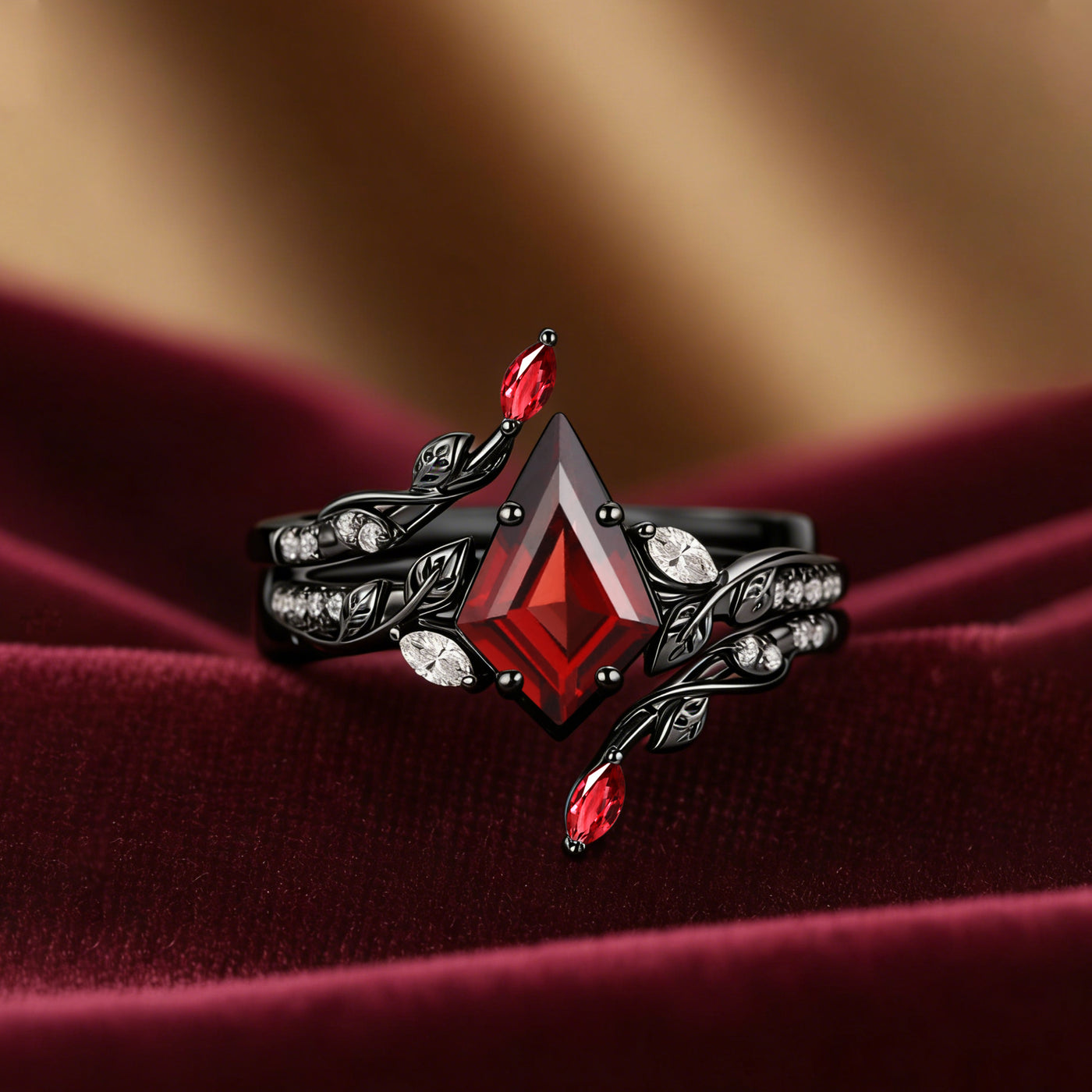
Rose gold is the warmest and most romantic pairing — the blush metal complements the red stone and softens both. Yellow gold gives a rich, historical feel and makes vivid ruby pop against a warm background. White gold creates high visual contrast — the cool metal against the vivid red is striking and modern. Black gold creates the most dramatic effect of all: the dark metal makes the ruby appear to glow from inside it. All four are available on Felicegals ruby settings.
How do I care for a ruby or garnet ring?
For ruby: warm water, dish soap, and a soft brush. Ultrasonic cleaners are generally safe for untreated ruby but should be avoided if the stone is fracture-filled. Avoid steam cleaning. For garnet: warm soapy water only — avoid ultrasonic cleaners and steam. Store both rings separately to prevent other jewelry from scratching the stone surface. Remove for high-impact activities, heavy cleaning, and pool swimming.
Felicegals crafts engagement rings for the non-traditional bride — handmade in solid gold with nature-inspired designs. Explore the full collection at felicegals.com.
